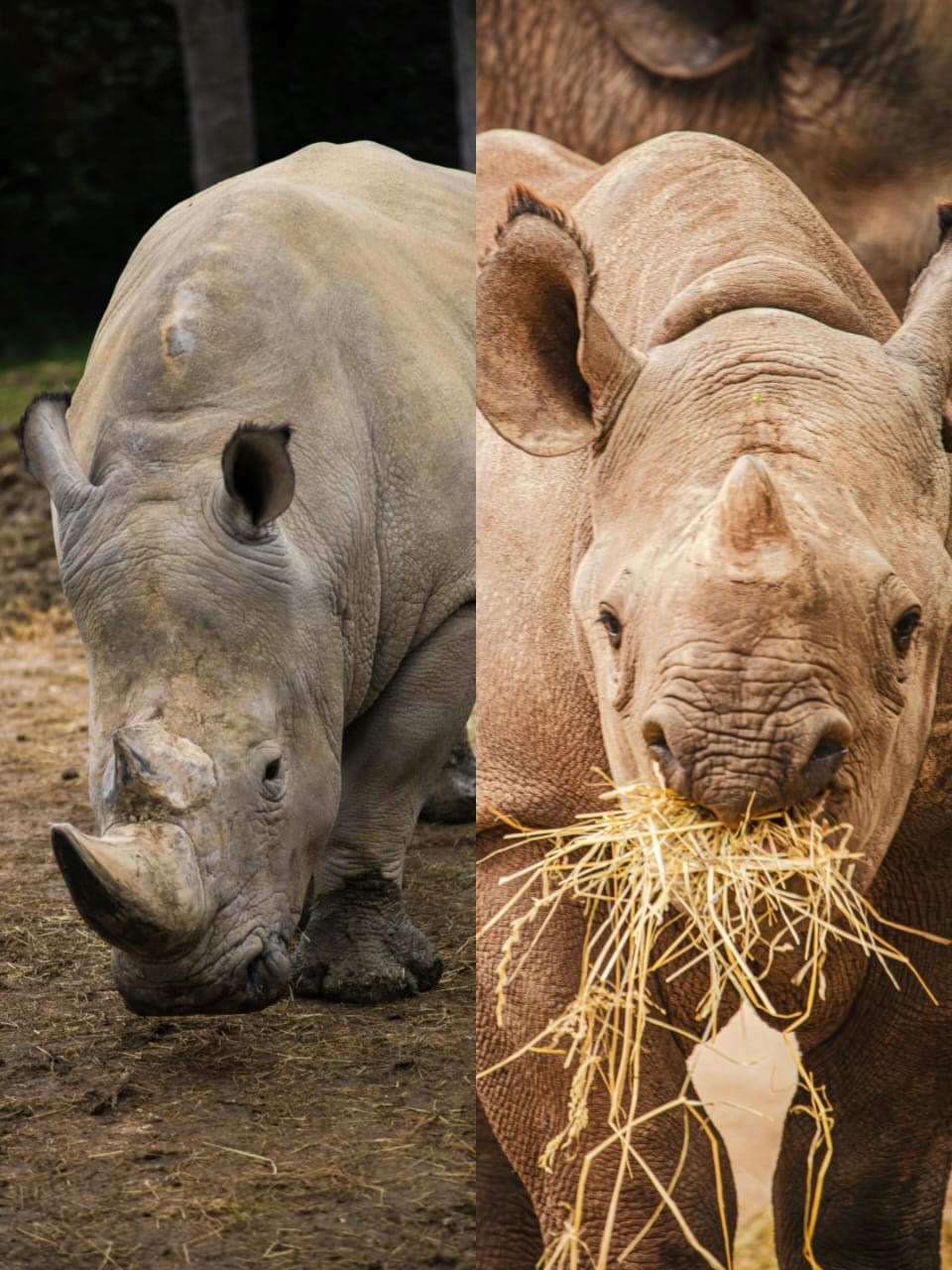
Black Rhino vs White Rhino: Key Differences Every Safari Traveler Should Know
White Rhino vs Black Rhino: Key Differences Explained
When it comes to African wildlife, few animals are as iconic as rhinoceros species. But many people don't realize that white rhinos and black rhinos are distinctly different animals with unique characteristics. Despite their names suggesting a color difference, both species are actually gray. So what truly sets them apart?
The Color Confusion: Why Are They Called White and Black?
First, let's address the elephant in the room—or rather, the rhino. Neither the white rhino nor the black rhino is actually white or black. Both species display a gray coloration that can appear lighter or darker depending on the mud and soil they've been rolling in.
The name "white rhino" likely comes from a mistranslation of the Afrikaans word "wyd" (wide), referring to the animal's wide, square-shaped mouth. Early English settlers misheard this as "white," and the name stuck. Black rhinos were then named in contrast to their "white" counterparts.
Physical Differences Between White and Black Rhinos
Mouth Shape: The Most Distinctive Feature
The most obvious difference between these two rhino species lies in their mouth structure:
White Rhino: Features a broad, flat, square-shaped lip designed for grazing. This wide mouth allows them to efficiently crop grass close to the ground, making them grazers.
Black Rhino: Has a pointed, hooked upper lip (sometimes called a prehensile lip) that functions like a finger. This adaptation helps them grasp branches, leaves, and twigs, making them browsers.
Size and Build
White Rhino: The larger of the two species, white rhinos are the second-largest land mammal after elephants. Adult males typically weigh between 4,000 to 6,000 pounds (1,800-2,700 kg) and stand about 5 to 6 feet tall at the shoulder.
Black Rhino: Smaller and more compact, adult black rhinos weigh between 1,800 to 3,100 pounds (800-1,400 kg) and stand approximately 4.5 to 5.5 feet tall at the shoulder.
Head Position and Hump
White Rhino: Has a pronounced hump on its neck and carries its head low to the ground, which is ideal for their grazing lifestyle.
Black Rhino: Lacks the distinctive neck hump and holds its head higher, allowing better visibility when browsing through bushes and trees.
Horn Characteristics
Both species have two horns, but there are subtle differences:
White Rhino: Generally has a longer front horn, with the record measuring over 5 feet in length.
Black Rhino: Tends to have horns that are more similar in length to each other, with the front horn sometimes appearing shorter and more curved.
Behavioral Differences
Diet and Feeding Habits
White Rhino: Strict grazers that feed primarily on grasses. They can often be found in open grasslands and savanna habitats where grass is abundant.
Black Rhino: Browsers that feed on woody plants, bushes, leaves, fruit, and thorny branches. They're commonly found in more densely vegetated areas with thick bush.
Temperament
White Rhino: Generally more social and less aggressive. They're often found in small groups called "crashes," particularly females with their young.
Black Rhino: Known for being more solitary, territorial, and potentially more aggressive when threatened. They have a reputation for being more unpredictable and are more likely to charge when startled.
Habitat Preferences
White Rhino: Prefers open grasslands and savannas with access to water sources. They need large areas of short grass for optimal grazing.
Black Rhino: Favors transitional zones between grasslands and forests, thorny thickets, and areas with dense vegetation that provides both food and cover.
Conservation Status
Both rhino species face critical conservation challenges, primarily due to poaching for their horns, but their situations differ:
White Rhino: The southern white rhino population has recovered remarkably due to conservation efforts, with approximately 18,000 individuals remaining. However, the northern white rhino is functionally extinct, with only two females remaining.
Black Rhino: Listed as Critically Endangered, with around 6,000 individuals left in the wild. Their population declined drastically in the 20th century but has been slowly recovering thanks to intensive conservation programs.
Geographic Distribution
White Rhino: Primarily found in South Africa, Namibia, Zimbabwe, and Kenya. South Africa hosts the majority of the world's white rhino population.
Black Rhino: Distributed across Kenya, Tanzania, Namibia, South Africa, and Zimbabwe, with smaller populations in other African countries.
How to Tell Them Apart in the Wild
When on safari or viewing rhinos in their natural habitat, use these quick identification tips:
- Look at the mouth: Square and wide = white rhino; pointed and hooked = black rhino
- Observe head position: Head down grazing = white rhino; head up browsing = black rhino
- Check the back: Pronounced hump = white rhino; no hump = black rhino
- Note the size: Larger and bulkier = white rhino; smaller and more compact = black rhino
Why Understanding These Differences Matters
Recognizing the distinctions between white and black rhinos is crucial for conservation efforts. Each species requires different habitat management strategies, protection protocols, and breeding programs. Understanding their unique ecological roles helps conservationists develop targeted approaches to ensure both species survive for future generations.
Conclusion
While both white rhinos and black rhinos are magnificent creatures facing similar threats, they are remarkably different animals adapted to distinct ecological niches. The white rhino's wide mouth and grazing lifestyle contrasts sharply with the black rhino's pointed lip and browsing behavior. Size, temperament, habitat preferences, and social structures further distinguish these two incredible species.
As both species continue to battle the threat of extinction, understanding and appreciating their differences becomes even more important. By supporting rhino conservation efforts and spreading awareness about these unique animals, we can all play a part in ensuring that both white and black rhinos thrive in the wild for generations to come.
Share This Story
